Deadline Approaching for 2014 Farm Bill Conservation Programs
Attention Members! The deadline for Natural Resource Conservation Service (NRCS) applications for 2014 Farm Bill conservation programs is quickly approaching. The deadline is November 15, 2013. This deadline includes California Environmental Quality Incentives Programs (EQIP).
EQIP priorities include but are not limited to: Water Quality (Animal Feeding Operations), Water Conservation/Irrigated Lands, Fish & Wildlife Habitat, Air Quality, Cropland, Organic and Specialty Crops, Forest Lands Management, Fire Recovery, Grazed Range & Pastureland Management, Tribal, Historically Underserved Clients.
Apply before the deadline by visiting a local NRCS office or USDA Service Center. More information is available on the web at www.ca.nrcs.usda.gov/contact/.
Alert to Agricultural Growers!
As you are likely aware, the UFW has filed a significant number of Notices of Intent to Take Access (“NA’s”) in the past several days. In response, the ALRB has resorted to calling employers rather than providing proof that a valid Notice of Intent to Take Access has been filed against them. In addition, the ALRB is also assisting the UFW by attempting to schedule UFW visits. Employers need to be aware that in order for a Notice of Intent to Take Access to be valid, it must include a valid case number and signature along with a stamp in the upper right hand corner. Based on what we have seen the last several days, employers need to know the following:
A Few Points of Clarity
1. Notices of Intent to Take Access are not valid unless they are properly filed with the ALRB, contain a valid case number and signature, along with a stamp in the upper right hand corner.
2. The ALRB has been calling employers to inform them that a Notice of Intent to Take Access has been filed on the company. A call from the ALRB does not constitute service.
3. The ALRB has been calling employers to schedule visits by the UFW. The ALRB cannot make an appointment for the UFW to come and take access to your property.
4. If you receive the attached letter, you do not need to respond.
5. The UFW organizers are requesting to be escorted by television crews of Telemundo. Employers should limit the number of people taking access to their property to the minimum required by the law. The Saqui Law Group has provided a cheat sheet to assist employers in navigating access by unions on your property.
Notice To Take Access
Counsel to Management: The ALRB has removed the veil of impartiality and is now assisting the UFW in facilitating access to your property. Not only are they trying to schedule visits for the UFW, but they are not providing the requisite proof that a valid Notice of Intent to Take Access has been filed. Employers should be aware that the UFW will attempt to make access to each property a huge event. Limiting access to those necessary will limit the grand spectacle they desire. Please do not hesitate to contact The Saqui Law Group if you have any questions about Notices of Intent to Take Access.
Governor Brown Signs Bill to Increase Minimum Wage in California
Governor Brown has signed AB 10 by Assemblymember Luis Alejo (D-Salinas), which will raise the minimum wage in California from $8.00 per hour to $10.00 per hour. AB 10 will raise California’s minimum wage in two one-dollar increments, from $8 per hour today to $9 per hour, effective July 1, 2014 and from $9 per hour to $10 per hour, effective January 1, 2016.
Currently, California ranks 8th in the country in minimum wage behind Nevada ($8.25), Connecticut ($8.25), Illinois ($8.25), District of Columbia ($8.25), Vermont (8.60), Oregon ($8.95) and the highest – the state of Washington ($9.19). In 2016, California could become the highest; however, Vermont, Oregon and Washington are all tied to inflationary increases and could very well be higher than $10 in 2016. Governor Brown Expands California's Paid Family Leave
Governor Brown signed SB 770 expanding California's Paid Family Leave (“PFL”) program to workers who need to care for seriously ill siblings, grandparents, grandchildren, and parents-in-law. Currently, PFL allows workers to receive partial pay for 6 weeks while bonding with a new child or caring for a seriously ill parent, child, spouse or registered domestic partner. Siblings, grandparents, grandchildren, and parents-in-law were not previously included in the law’s narrow definition of family. The PFL program is fully paid for by workers through payroll deductions, but many have been unable to access the benefit because of the limitations of the law’s previous definition of family. These changes will take effect July 1, 2014, coinciding with the 10th anniversary of PFL’s implementation in California. Counsel to Management: If you need help determining how these changes impact your business, please feel free to contact the Saqui Law Group.
Redistributed and reprinted from our labor law partner, the Saqui Law Group.
Affordable Care Act Notice Required by Oct. 1st
You must provide a written notice to all of your employees, whether they are eligible for health benefits or not, about the Health Insurance Marketplace by October 1, 2013. The U.S. Department of Labor has two model notices to help employers comply. There is one model for employers who do not offer a health plan and another model for employers who offer a health plan or some or all employees. The 3rd page of the form is optional:
The notice should inform employees:
- About the Health Insurance Marketplace;
- That, depending on their income and what coverage may be offered by the employer, they may be able to get lower cost private insurance in the Marketplace; and
- That if they buy insurance through the Marketplace, they may lose the employer contribution (if any) to their health benefits.
If you have any questions regarding the noticing requirements, please contact Casey Creamer at (559) 252-0684.
Tulare Lake Basin WDR to be Heard on Sept. 19th
The Central Valley Regional Water Quality Control Board will consider adoption of the Tulare Lake Basin Waste Discharge Requirements on September 19th at the Radisson Hotel in Fresno. The Hearing will begin at 9 am. The Tulare Lake Basin covers all irrigated agriculture south of the San Joaquin River to Kern County excluding the Westlands Water District. This is the second of a series of coalition specific WDR’s that will be heard by the Board. The Board adopted the Eastern San Joaquin River WDR last December. A revised draft of the requirements is expected to be released at least 10 days prior to the hearing. The Association along with other ag and coalition group representatives have received indications that our proposed amendments will be included in the revised regulation. Even with the amendments, the WDR is expected to be very similar to the requirements that were adopted in the Eastside WDR. The regulation has been significantly modified since the August 2012 workshop in Tulare. Staff has continually worked with ag and coalition representatives to make the program more workable than previous drafts. Having said that, the regulation will still have significant impacts to all farming operations. We encourage all of our growers to attend the hearing on the 19th. If you have any questions about the proposed WDR, please contact Casey Creamer at (559) 252-0684 or at casey@ccgga.org.
Revised Solar Legislation Would Harm Agricultural Solar Instalations!
While it has been a relatively quiet year given the makeup of the state legislature and administration, it is far from being silent! In a last minute jam job, important legislation was hijacked and amendments were forced into it that could seriously jeopardize future solar installations and irreparably harm existing solar installations by changing the game midstream and providing for lower paybacks than accounted for. This is unacceptable and your Association is taking a stand! (see attached press release)
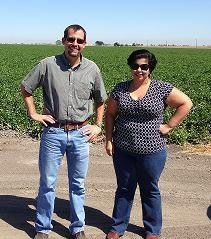
Association Hosts Water Board Member
The Association in cooperation with the Westside Coalition, recently hosted Board Member
Carmen Ramirez of the Central Valley Regional Water Quality Control Board for an educational
tour in the Los Banos Area. The tour consisted of a visit to Growers Association Chairman
Cannon Michael’s operationtolook at the practices of their diversified row crop farm. We also
took Ms. Ramirez on a tour of the San Luis Canal Co.facilities and where she received an overview
of the water quality programs from water conservation specialist Alejandro Paolini. David Cory
of the Westside Coalition also gave Ms. Ramirez an overview of the Westside Coalition and its
efforts to address water quality. Ms. Ramirez was one of the few members that shown interest in
a farm visit, but had yet found the time to do so. She is a Merced native and an attorney for the
Law Offices of Fagalde, Albertoni, & Flores.
Incentive Funding Available for Truck Owner/Operators
At a recent San Joaquin Valley Air Pollution Control District Governing Board meeting, SJVAPCD staff acknowledged impending concerns regarding the January 1, 2014 deadline for the ARB truck rule. Staff expressed specific concerns for the more vulnerable small
l truck fleets and owner/operators. To address this issue, the district recommended establishing an incentive program for owner/operators to replace their trucks. The program would aim to:
- Utilize $7 million dollars of funding in the District’s 13/14 budget for the Truck Voucher Program.
- Prioritize single owner/operators for funding until December 31, 2013.
- Leverage ARB’s load assistance programs for trucks to help finance single owner/operators.
- Use a targeted outreach campaign to target Valley-based single owner/operators.
CCGGA’s Director of Regulatory Affairs, Aimee Brooks testified at the Governing Board meeting and addressed the board saying “our members who are affected will want to do the right thing and remain in compliance, but they will need assistance from programs like this to help with the large costs associated with meeting ARB’s truck rule requirements.”
The item was approved by the Governing Board and CCGGA will be updating with the latest developments.
Agriculture Comes Together for Delta Water Summit
Several hundred people were in attendance for the Delta Water Summit held August 3rd at Fresno State to discuss the latest in the continuing water crisis facing California. Co-Sponsored by the California Cotton Ginners and Growers Associations and the Western Agricultural Processors Association, the event featured speakers from water agencies, federal and state water agencies and a panel of state and federal legislators. Hosted by the Latino Water Coalition, several speakers highlighted the severity of the continuing water supply crisis in California. Deputy Operating Officer Joan Maher of the Santa Clara Valley Water District indicated they are on the verge of water use restrictions in 2014. Tom Birmingham of the Westlands Water District indicated some growers are paying as much as $1,500 per acre foot for supplemental water, and the Bureau of Reclamation indicated that water allocations could be 0 to 15% in 2014, even with an average rainfall year! One of the speakers was U.S. Bureau of Reclamation Commissioner Michael Conner, who addressed the federal government’s efforts on the issue. Many speakers spoke of both short term and long term solutions including a lot of discussion centering on the Bay Delta Conservation Plan (BDCP). Speakers discussed the Twin Tunnels and ecosystem restoration for the delta. Also discussed was the upcoming Water Bond. Several legislators addressed this issue specifically, including the effort by some to remove the storage component from the bond. There is a high likelihood that the water bond will be opened up this legislative session to reduce the cost and many fear that the storage is on the table for cuts. However, legislators from the valley assured the crowd that they do not support that effort. Legislators in attendance included Congressman Jim Costa and Congressman David Valadao, from the federal side. Representing the state legislature was Senator Jean Fuller, Senator Anthony Cannella, Senator Tom Berryhill, Assemblyman Rudy Salas, Assemblyman Jim Patterson, and Assemblyman Henry T. Perea. The meeting came to a close with a call to arms from Assemblyman Henry T. Perea, asking everyone to be prepared to help find a solution that protects all interests.
State Water Board Sends Notice on Surface Water Shortage for 2013
The State Water Resources Control Board has send an advisory to all diverters of surface water of a surface water shortage for 2013. The letter indicates record dry and warm conditions over the past two years have led to this situation and provides information on conservation guidelines. (Click here for the advisory). This is just a signal of the tough road ahead folks.
FOR IMMEDIATE RELEASE:
CONTACT:
Roger A. Isom
California Cotton Ginners and Growers Associations
Western Agricultural Processors Association
Phone: (559)252-0684
Fax: (559)252-0551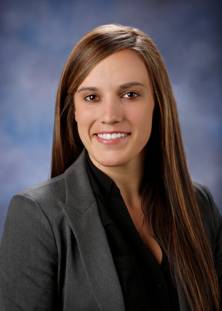
email: roger@ccgga.org
California Cotton Ginners and Growers Associations and Western Agricultural Processors Association Announces the Hiring of Director of Regulatory Affairs
The California Cotton Ginners and Growers Associations (CCGGA) and the Western Agricultural Processors Association (WAPA) are pleased to announce Aimee Brooks has joined the organization as their new Director of Regulatory Affairs. Ms. Brooks recently graduated from Cal Poly – San Luis Obispo with a degree in Agricultural Communications. Ms. Brooks comes from a farm family near Riverdale, California and will begin her duties on July 1st. As the Director of Regulatory Affairs, Aimee will be responsible for regulatory and legislative issues with respect to cotton growers and ginners, as well as the tree nut hulling and processing industries.
The California Cotton Ginners and Growers Associations are voluntary dues-based organizations representing cotton growers and cotton gins throughout California. The Western Agricultural Processors Association is a voluntary dues-based organization, and represents the tree nut hulling and processing industry on regulatory and legislative issues ranging from energy and air quality to labor and food safety. All three organizations are operated and managed in the same offices in Fresno, California.
ACIR Applauds Landmark AG Labor Agreement, Welcomes Senate Comprehensive Immigration Bill
As you may have heard, the Senate reached an agreement this week on comprehensive immigration reform that will also address our agricultural worker needs. The Agricultural Workforce Coalition (AWC) and Agriculture Coalition for Immigration Reform (ACIR) were an integral part of the negotiations and released the attached statement. Click here for the ACIR press release.
Navigating Overtime Exemptions Applicable to Truck Drivers
The California Wage Orders contain numerous exemptions from overtime requirements. Sifting through these exemptions can be troublesome, especially when it comes to certain truck drivers. Truck drivers can be exempt from overtime under the California Wage Orders and the Federal Fair Labor Standards Act (FLSA) if they meet certain requirements.
If your drivers are in California the first step is to determine what California Wage Order is applicable. The next step is to look at whether your drivers satisfy the overtime exemptions applicable to drivers provided in most Wage Orders. To determine if the overtime exemption applies it is necessary to consider the type of truck they operate and look at whether their hours of service are regulated by the U.S. Department of Transportation or the California Code of Regulations. Generally, the applicability of these provisions is based upon the type and weight of truck, whether the driver crosses state lines, and the final destination of the product being transported. Where drivers are covered by these provisions it also necessary to determine if they are required to receive overtime provided by the FLSA. The FLSA exempts some employees from overtime requirements, including certain employees engaged in agriculture.
For example, the hours of service of a driver operating a truck with a gross vehicle weight rating over 28,000 pounds, who drives within California and carries products ultimately destined for a location outside of California, will be governed by the U.S. Department of Transportation. Under most California Wage Orders this driver will be exempt from the Wage Orders’ overtime requirements.
Counsel to Management:
Determining whether your drivers are exempt from overtime provisions is a muti-step process requiring careful analysis of the many areas where state and federal law overlap. Incorrectly finding that your drivers are exempt from overtime provisions can result in significant individual or collective actions seeking recovery of unpaid wages and substantial penalties. Contact The Saqui Law Group if you have questions about properly exempting your drivers from overtime requirements or to ensure that you are in compliance.
Funding Opportunities For Agricultural Equipment
Workshops are being held to provide information and assistance in obtaining grant funding for agricultural equipment replacement.
The SJVAPCD, USDA Natural Resources Conservation Service, and Public Utility Companies, in conjunction with the agricultural community, will be providing information and application assistance to farmers in the Valley on the following days. Click here for flyer.
CCGGA Executive Vice President Isom Speaks Out Against More Air Quality Regulations
In a hearing yesterday of the San Joaquin Valley Air Pollution Control District, CA Cotton Ginners and Growers Associations (CCGGA) Executive Vice President Roger Isom testified against the adoption of an air quality plan for PM2.5. Citing numerous regulations already imposed on agriculture, Isom testified that California agriculture is already at a huge competitive disadvantage to other agricultural areas in the US and the world. The plan was eventually passed by the District, but the focus of the plan will be on fireplaces and charbroilers. However, the farm equipment rule being developed by the California Air Resources Board will be included in the plan. For news coverage, see: http://www.fresnobee.com/2012/12/20/3108922/new-valley-air-plan-will-cut-fireplace.html#storylink=cpy.
Solar Equipment May Now Quality for Partial Sales and Use Tax Exemption
Thinking of putting in solar for your farm or cotton gin? If so, you should be aware that the California Board of Equalization has recently ruled that solar facilities may qualify for the farm equipment and machinery partial sales and use tax exemption. Sales and leases of farm equipment and machinery, including solar power facilities, that meet certain criteria are partially exempt from California’s sales and use tax. The farm equipment and machinery partial exemption applies to the state general fund portion of the sales and use tax rate, currently 5.25 percent. Eligible persons who purchase qualifying farm equipment and machinery that is used at least 50 percent in the production and harvesting of agricultural products may claim the partial exemption. If you otherwise qualify for the farm equipment and machinery partial exemption, your solar power facilities that are tied to the local power grid but are not directly attached to qualifying farm equipment may qualify, if they are designed to generate power for such equipment and machinery. For more details, please see the BOE Announcement (click here).
Air District Rolls Out Next Round of Tractor/Loader Incentive Monies
The San Joaquin Valley Air Pollution Control District has announced the next round of incentive funds for the replacement of tractors and loaders will open on October 15, 2012. This program provides incentives for replacement of in-use, off-road tractors that are engaged in agricultural operations as defined by the California Air Resources Board. Eligible equipment includes but is not limited to wheel loaders, balers, combines, graders or tractors. Funding amounts are based on a dollar per horsepower table as determined by the horsepower of the engine in the new tractor, not to exceed 80% of the eligible costs. Average reimbursement is around 50%. This program will be different than last year’s program in that it is now first come, first served and will be funded on a continuous basis year round. As money becomes available, more tractors will be funded. To obtain an application please visit the Air District’s website at http://www.valleyair.org/Grant_Programs/GrantPrograms.htm#HeavyDuty. The application and guidelines are also posted on our website at http://www.ccgga.org/industry_issues/.
AGI Notices Being Sent to Producers
USDA recently announced that letters will be mailed to certain producers which will require them to re-verify their compliance with Adjusted Gross Income (AGI) test requirements for either ’09 or ’10.
Producers who receive these letters will be instructed to contact their Farm Service Agency (FSA) state office and provide either a signed statement from a CPA or an attorney that verifies their average AGI did not exceed the applicable AGI limitations. They also may work with their state office records and demonstrate they are in compliance through their federal tax returns that were filed with the IRS for the applicable years. Producers will have 30 days to contact their FSA state offices.
These letters are part of the AGI verification process that identified producers flagged by the IRS because their AGI potentially exceeds limits set in the farm law. The letter will have the contact information, including telephone number and address of their FSA state office. If producers have any questions, they should call their state office. |
